
Xbox and AMD Announce FSR 4.1: What It Means for Console Gaming, Handhelds and the Future of Xbox.
AMD and Microsoft have announced plans to bring FSR Upscaling 4.1 to Xbox Series X|S, alongside expanded support for gaming handhelds and PC hardware. But what does this technology actually mean for players, and how could it shape the next generation of Xbox?
The partnership between Xbox and AMD has taken another important step forward, with AMD confirming that its latest machine-learning-powered upscaling technology is expanding beyond its existing graphics card support.
The announcement includes Xbox Series X|S, selected handheld gaming devices, Radeon RX 6000-series graphics cards and several Ryzen processor families.
For existing Xbox owners, this is particularly interesting. Rather than focusing entirely on new consoles, Microsoft and AMD are exploring ways to improve visual quality and performance on hardware players already own.
And with Project Helix, Microsoft’s next-generation Xbox console, also in development, the announcement offers another indication of where Xbox graphics technology could be heading.
What Is AMD FSR 4.1?
FSR stands for FidelityFX Super Resolution, AMD’s technology designed to help games deliver higher-quality images while reducing some of the workload placed on graphics hardware.
Instead of rendering every frame at a demanding native resolution, a game can render at a lower internal resolution before FSR reconstructs the image for a higher-resolution display.
FSR 4.1 uses machine learning to improve that reconstruction process, helping preserve fine details and improve image stability.
For example, a game targeting a 4K display might render internally at a lower resolution and use FSR to reconstruct the final image.
The goal is to provide an image that looks closer to a higher-resolution render without requiring the same level of GPU processing.
This can give developers more flexibility when balancing visual quality, frame rate and graphical effects.
However, it’s important to understand that upscaling does not automatically increase performance in every situation. The results depend on the game, the hardware and how the technology is implemented.
What Does FSR 4.1 Mean for Xbox Series X and Series S?
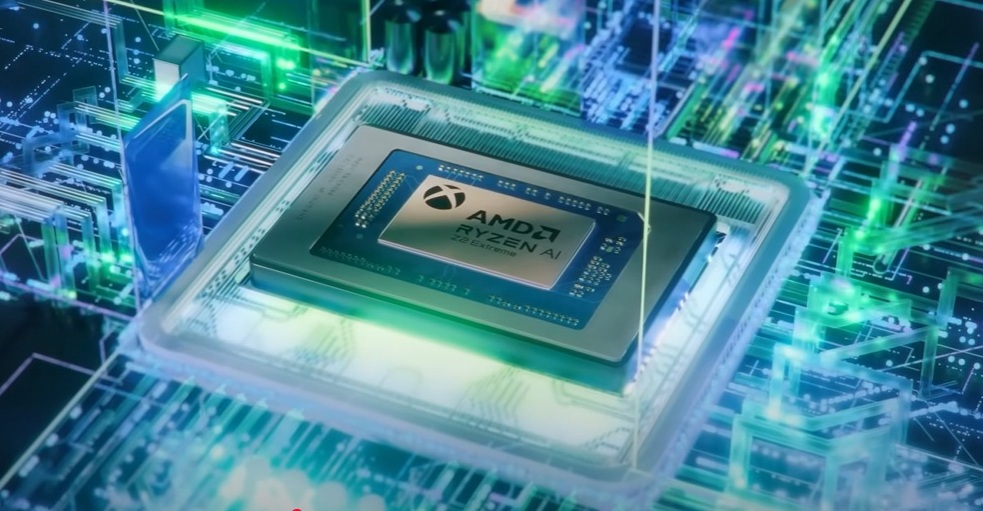
One of the biggest announcements is that FSR 4.1 is coming to both Xbox Series X and Xbox Series S.
Both consoles use AMD-based hardware, but they have different performance capabilities.
The Series X was designed to deliver higher-end console performance, while the more affordable Series S operates with a smaller GPU and more limited memory resources.
That makes improvements in rendering efficiency particularly interesting.
For Xbox Series X owners, FSR 4.1 could help developers maintain better image clarity when using demanding visual effects or higher frame-rate targets.
For Series S owners, the potential benefits could be especially noticeable in games where developers need to make compromises between resolution and performance.
Better image reconstruction could help games look sharper without requiring the console to render every frame at a higher native resolution.
However, there is an important distinction.
FSR 4.1 does not automatically upgrade every Xbox game.
Developers will need compatible implementations, and Microsoft has not yet confirmed which Xbox Series X|S titles will support the technology.
There is also no confirmed date for its arrival on the consoles.
We should therefore treat improvements to individual games as possibilities rather than guaranteed results.
Gaming Handhelds Could Be Among the Biggest Beneficiaries
Handheld gaming devices face a different challenge from traditional consoles.
Their processors and graphics hardware must operate within much tighter power and thermal limits, making efficient rendering particularly valuable.
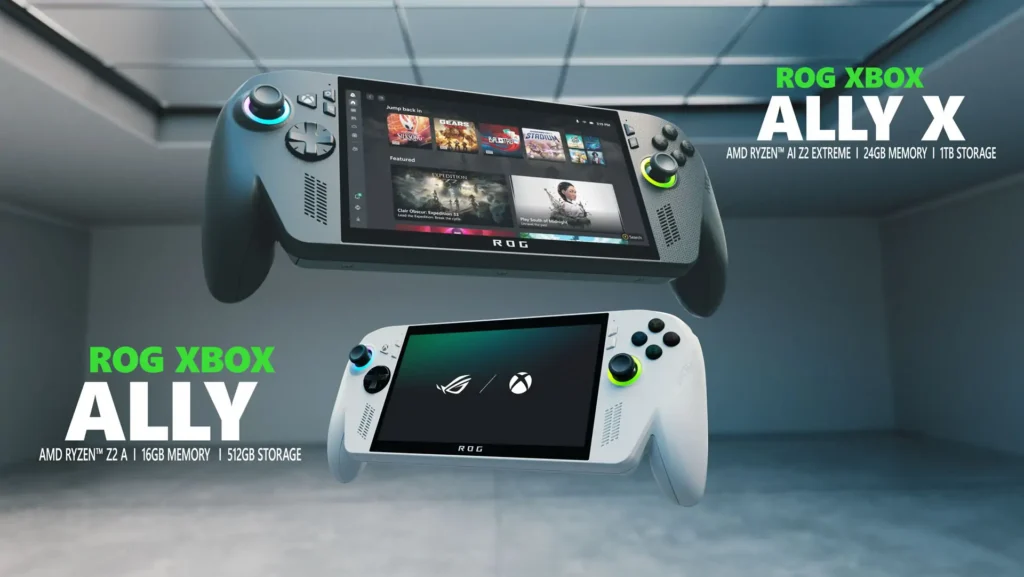
AMD has confirmed expanded FSR 4.1 support for selected Ryzen Z2 processors, including the Ryzen AI Z2 Extreme, Ryzen Z2 Extreme and Ryzen Z2 A.
The announcement also includes support for Ryzen AI Max and Ryzen AI 9 systems, opening the door to improved image reconstruction across compatible laptops, handhelds and compact gaming PCs.
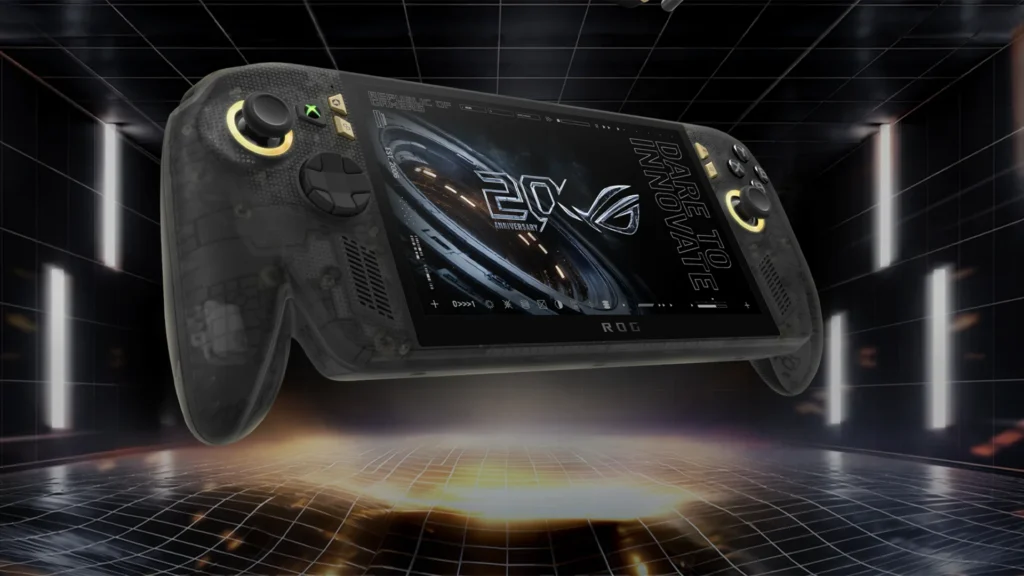
For devices such as the ROG Xbox Ally family, this could be an important development.
Handheld players often have to choose between sharper visuals, smoother frame rates and longer battery life.
Improved upscaling could provide greater flexibility in how games are configured.
That does not mean FSR 4.1 will automatically extend battery life or dramatically increase frame rates. Those benefits would need to be demonstrated through real-world testing.
Nevertheless, the ability to deliver a cleaner image at a lower rendering resolution is particularly relevant to portable gaming.
Older Radeon Graphics Cards Are Getting Attention Too
Another significant part of AMD’s announcement is the expansion of FSR 4.1 to Radeon RX 6000-series graphics cards.
These GPUs originally launched in 2020, meaning AMD is bringing newer image reconstruction technology to hardware that some PC gamers have been using for several years.
For players who are not ready to upgrade their graphics cards, that could be welcome news.
AMD says FSR 4.1 can deliver a noticeable improvement in image quality compared with its previous FSR 3.1 solution.
This is especially relevant at a time when upgrading a gaming PC can be expensive.
Instead of relying entirely on new hardware purchases, software improvements can potentially help existing systems remain useful for longer.
Of course, the technology cannot overcome every hardware limitation. Older GPUs will still have restrictions involving memory capacity, processing power and advanced graphical effects.
But extending support to established hardware is a positive development for players looking to get more value from their existing systems.
How Does FSR 4.1 Compare With Nvidia DLSS and PlayStation’s PSSR and PlayStation’s PSSR?

Upscaling has become one of the most important areas of modern graphics development.
Nvidia has invested heavily in its DLSS technology, while Sony has developed PlayStation Spectral Super Resolution, better known as PSSR, for PlayStation hardware.
AMD’s FSR technology is another major part of this evolving landscape.
Although the technologies use different hardware capabilities and reconstruction techniques, they share a similar objective: delivering higher-quality images while managing the cost of rendering increasingly complex games.
One particularly interesting detail is AMD’s collaboration with Sony through Project Amethyst, which has contributed to research behind its machine-learning graphics technology.
This demonstrates that advances in rendering technology do not necessarily happen in isolation.
Competition remains important, but some of the underlying research and engineering can benefit several gaming platforms.
For players, the most important question is not which technology has the most impressive name.
It is whether games look better, perform consistently and provide more graphical options.
Independent comparisons will be essential before declaring any one solution superior.
Project Helix and the Next Generation of Xbox
The announcement also provides another connection to Microsoft’s future hardware plans.
Xbox has already confirmed that Project Helix is in development through its ongoing partnership with AMD.
Microsoft has described the next-generation system as a platform designed to bring Xbox console and PC gaming closer together, supported by custom AMD technology.
AMD and Xbox have now discussed FSR Diamond, a future generation of graphics technology intended to help power Project Helix.
This is separate from the FSR 4.1 rollout planned for current Xbox consoles.
The broader direction is becoming clearer.
Rather than relying only on increases in raw graphics processing power, future Xbox hardware is expected to make greater use of intelligent rendering, machine learning and advanced graphics techniques.
These technologies could help developers create more detailed worlds while managing increasingly demanding visual effects.
However, Microsoft has not yet demonstrated the final performance of Project Helix or confirmed exactly how FSR Diamond will work in released games.
It would be premature to draw conclusions about the console’s eventual graphical capabilities.
Why This Announcement Matters
For years, console generations have largely been defined by new hardware.
More powerful processors, faster graphics chips and additional memory have traditionally been the main selling points.
Those improvements remain important, but software-based rendering technology is increasingly becoming part of the equation.
FSR 4.1 is an example of how existing gaming hardware can potentially benefit from newer graphics techniques.
For Xbox Series X|S owners, it could mean improvements in supported games without purchasing another console.
For handheld players, it could offer more flexibility when balancing performance and image quality.
And for PC gamers using older Radeon hardware, it provides another reason to continue using equipment they already own.
The technology will still need to prove itself through game support, performance testing and real-world comparisons.
WildStarGaming’s View
What makes this announcement particularly interesting is that it isn’t simply about selling another piece of gaming hardware.
At a time when the cost of gaming continues to be a concern, seeing companies invest in technology that could improve existing devices is encouraging.
There is often a great deal of attention placed on what the next console or graphics card might deliver, but there is also considerable value in improving the hardware people already have.
The Xbox Series X and Series S are established platforms, and bringing newer upscaling technology to them could help extend their relevance.
The same applies to handheld gaming PCs, where every improvement in rendering efficiency can be valuable.
As an owner of the ASUS ROG Xbox Ally, this announcement is something I’m particularly excited about.
Handheld gaming continues to grow, and technologies such as AMD’s FSR 4.1 could play an important role in improving the experience for players using portable hardware.
I’m especially interested in seeing whether these developments can deliver sharper visuals and smoother gameplay without placing additional demands on the hardware.
Of course, we still need to see how FSR 4.1 performs on the ROG Xbox Ally itself, and exactly how support will be introduced.
But as someone who enjoys gaming on a handheld, I’m looking forward to following its development and seeing what AMD and Xbox can bring to the handheld community.
That said, we should keep expectations realistic.
FSR 4.1 isn’t a magical performance upgrade, and it won’t suddenly remove the limitations of existing hardware.
What matters now is how effectively developers implement it, which games receive support and whether players see meaningful improvements.
For now, this looks like a promising development for Xbox, AMD and PC gaming, but the real results will come when we can see the technology running in games.
With Project Helix also on the horizon, the partnership between Microsoft and AMD is clearly becoming an increasingly important part of Xbox’s future.
Edited By: Frank