
📰 Written By: Frank…
Excerpt
Electronic Arts is now privately owned following a record-breaking acquisition led by Saudi Arabia’s Public Investment Fund. The games will not change overnight, but EA’s long-term priorities may.
Website report
Electronic Arts has officially entered a new era.
The $55 billion acquisition of EA by a consortium comprising Saudi Arabia’s Public Investment Fund, Silver Lake and Affinity Partners has now been completed.
The agreement was first announced in September 2025 and approved by EA shareholders in December. After receiving the necessary regulatory clearances, the transaction closed on 4 August 2026.
The deal takes Electronic Arts private and ends its long period as a publicly traded company. Existing shareholders received $210 in cash for each eligible EA share. EA describes the transaction as the largest all-cash, sponsor-backed take-private investment ever completed.
For players, however, the immediate question is straightforward:
What actually changes?
EA’s games are unlikely to change immediately
In the short term, probably very little.
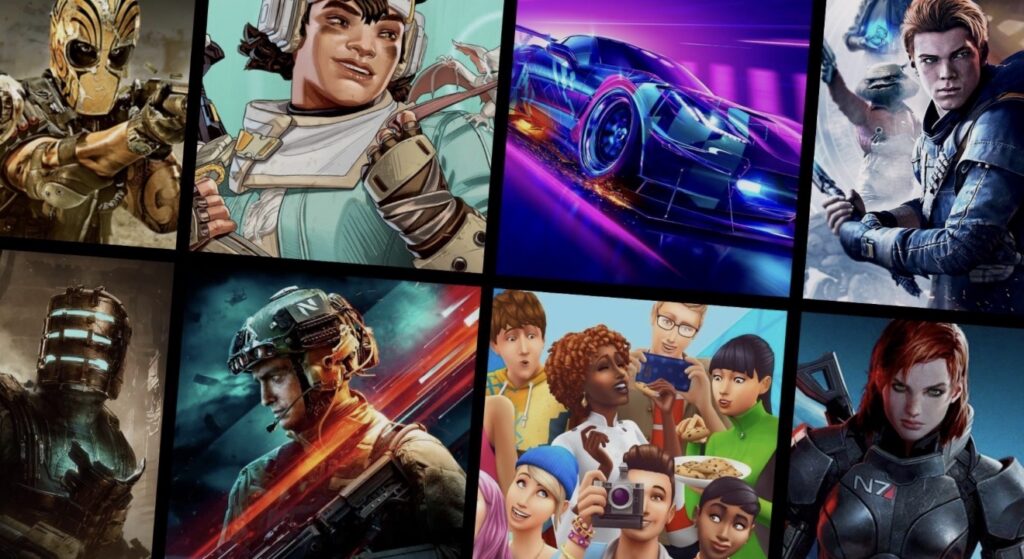
EA still owns and operates some of the largest franchises in modern gaming, including:
- EA Sports FC
- Battlefield
- The Sims
- Apex Legends
- Madden NFL
- Need for Speed
- Mass Effect
- Dragon Age
Games already deep into development will not suddenly be rebuilt because the ownership structure has changed. Existing live-service roadmaps, release plans and studio operations are also unlikely to be transformed overnight.
Andrew Wilson remains in charge as chairman and chief executive, which provides continuity at the top of the company. EA says its new owners will provide long-term capital, industry experience and strategic support intended to accelerate growth and creative investment.
That is the official position.
The more important questions concern what happens several years from now.
EA no longer answers to the public market
Becoming private changes the financial environment around EA.
As a publicly traded company, EA had to report its financial performance to shareholders every quarter. Its leadership was regularly judged against revenue forecasts, bookings, margins and short-term market expectations.
Private ownership could give the company more freedom to make longer-term investments without every decision being examined through the next quarterly results announcement.
That could theoretically allow EA to:
- Invest in longer development cycles.
- Support new technology and gaming platforms.
- Revive dormant franchises.
- Fund experimental projects.
- Expand its global reach.
However, private ownership does not automatically mean greater creative freedom.
The acquisition includes substantial debt financing. The original agreement involved approximately $36 billion of equity investment and $20 billion in committed debt financing, with most of that debt expected to be used when the deal closed.
That debt matters because it must ultimately be serviced.
It could increase pressure on EA to prioritise dependable revenue from its biggest franchises, subscriptions, live-service games and recurring digital spending.
This creates two very different possible futures.
One is an EA with patient financial backing that can invest in ambitious projects.
The other is an EA pushed even harder towards predictable, highly profitable franchises to meet the financial demands created by the takeover.
At this stage, nobody outside the new ownership group can say with certainty which direction will dominate.
Will EA take more creative risks?
This is especially relevant following the wider industry discussion around risk.
EA has an enormous catalogue of recognisable properties, but many players feel its modern identity is increasingly built around sports titles, Battlefield, The Sims and established live-service businesses.
Under private ownership, EA could choose to invest more heavily in new intellectual properties and smaller creative projects.
It could also decide that the safest path is concentrating resources on franchises that already generate billions in revenue.
Reporting around the acquisition has already raised concerns that the company may focus more strongly on its most commercially dependable properties. That outcome is plausible, but it has not been officially confirmed as EA’s new development policy.
The distinction is important.
We should not present future studio closures, cancellations or changes to specific franchises as established facts unless EA announces them.
But it is entirely reasonable to question how a debt-backed acquisition of this size may influence investment decisions.
Saudi Arabia’s expanding position in gaming
The deal also significantly increases Saudi Arabia’s influence within the global games industry.
The Public Investment Fund has invested across gaming, esports, entertainment and technology as part of the country’s wider economic diversification strategy.
Its involvement in EA is particularly significant because EA is not a niche publisher. It reaches a vast international audience through football, American sports, shooters, simulation games and mobile products.
Reuters has described the acquisition as another major step in Saudi Arabia’s effort to establish itself as a global centre for gaming and sports.
That has generated debate beyond finance.
Some players and creators have raised concerns about human rights, editorial independence and whether franchises known for inclusive representation could face outside influence.
EA has not announced changes to the creative direction or values of franchises such as The Sims. Concerns about future interference therefore remain concerns rather than evidence of confirmed policy changes.
That uncertainty should be discussed, but not exaggerated.
What could this mean for EA Sports FC?
EA Sports FC is likely to remain one of the company’s most important assets.
Its annual release cycle, Ultimate Team economy and global football audience provide recurring and relatively predictable revenue.
The new owners may see opportunities to expand the series further through:
- Esports.
- Mobile gaming.
- Streaming and media.
- Partnerships with leagues and clubs.
- Markets where console ownership remains comparatively low.
For players, the concern will be whether increased investment improves the core experience or simply expands monetisation.
That question will only be answered through future releases.
Battlefield faces a different challenge
Battlefield remains one of EA’s most valuable gaming brands, but it also carries significant development costs and expectations.
The franchise’s future may provide an early indication of how the new ownership group approaches major AAA investment.
Will EA give its studios the time and resources needed to build long-term confidence?
Or will the pressure for rapid financial returns encourage shorter development cycles and safer decisions?
Battlefield’s performance and post-launch support will be closely watched.
The Sims may receive the most scrutiny
The Sims occupies a unique position inside EA.
It has a large, diverse community and a long history of player creativity, identity and self-expression.
Because Saudi Arabia criminalises same-sex relationships and has a widely criticised human-rights record, some members of the community are concerned about whether the new ownership could eventually affect content or representation.
There is currently no confirmed evidence that the acquisition has changed The Sims’ creative direction.
Nevertheless, EA will need to communicate clearly if it wants to maintain trust. Silence or vague statements could allow speculation to grow, particularly around a franchise for which inclusion is central to the community.
Is consolidation good for gaming?
The EA acquisition is part of a much wider change across the industry.
Microsoft acquired Activision Blizzard.
Take-Two acquired Zynga.
Sony has continued expanding its studio portfolio.
Tencent holds investments across numerous developers and publishers.
Gaming’s largest businesses are increasingly being controlled by platform holders, private-equity groups, sovereign funds and global technology companies.
Supporters argue that these organisations provide the capital required to fund increasingly expensive games.
Critics argue that consolidation reduces competition, concentrates decision-making and can make studios more vulnerable when financial priorities change.
Both arguments contain truth.
Large investments can fund projects that smaller companies could never afford.
They can also create pressure for cost reductions, restructuring and a stronger reliance on proven franchises.
The impact depends less on the announcement and more on what the owners do afterwards.
What players should watch next
The most useful approach is not to assume the takeover will either save or destroy EA.
Instead, players should watch for tangible evidence:
- Changes in studio leadership.
- New project announcements.
- Game cancellations.
- Layoffs or studio closures.
- Investment in original IP.
- Treatment of established franchises.
- Changes to monetisation.
- EA’s communication around creative independence.
Those decisions will reveal far more than corporate statements made on the day the deal closed.
WildStarGaming verdict
EA’s $55 billion takeover is one of the most significant business deals in gaming history.
It gives the company access to powerful financial backing and removes the pressure of reporting to public shareholders every quarter.
But it also introduces substantial debt and places one of gaming’s largest publishers under the control of a consortium dominated by Saudi Arabia’s Public Investment Fund.
For players, nothing changes immediately.
EA Sports FC, Battlefield, The Sims and Apex Legends will continue.
The real consequences will emerge slowly through investment decisions, studio management, monetisation and the kinds of games EA chooses to make.
This deal should not automatically be treated as good or bad.
But it should be watched closely.
The key question is no longer whether EA has changed owners.
It is whether those new owners use their influence to support creativity and better games—or simply demand more predictable returns from the franchises that already make the most money.
What do you think?
Contact us on our social media.