
STEAM MACHINE PRICING, HAS VALVE GOT IT RIGHT…
23 June 2026|In-Depth

Steam Machine Pricing Shows Valve Is Playing A Very Different Console Game
Valve’s new Steam Machine finally has a price, and it is not cheap.
The compact living-room gaming PC starts at $1,049 / £879 for the 512GB model, while the larger 2TB version costs $1,349 / £1,149. Bundles with the new Steam Controller push the price even higher.
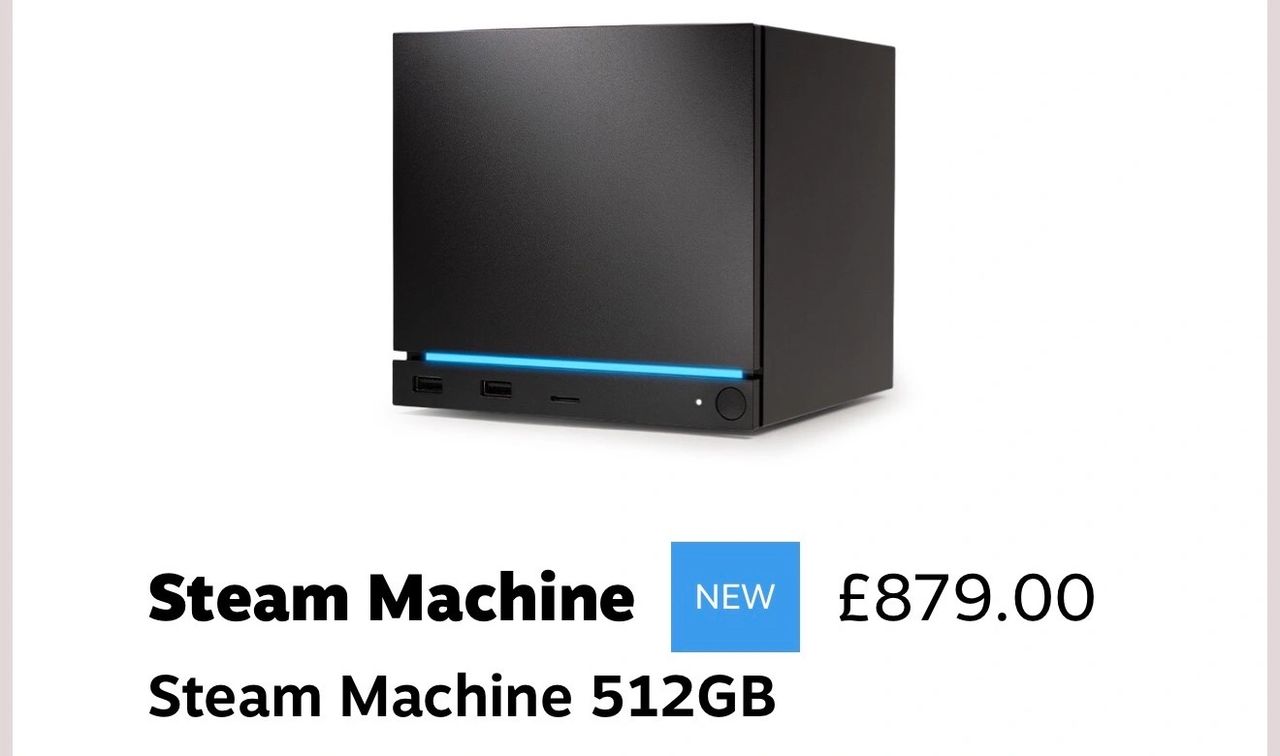
That immediately puts the Steam Machine in a strange position. It looks like a console, it is designed to sit under a TV like a console, and it is clearly being aimed at players who want a simpler way to play their Steam library from the sofa. But the price is much closer to a gaming PC than a PlayStation or Xbox.
That is the real story here.
Valve is not trying to compete with Sony and Microsoft in the traditional way. PlayStation and Xbox have usually relied on a console model where the hardware can be priced aggressively, sometimes with smaller margins, because the platform holder makes money back through game sales, subscriptions, accessories, and its own locked-down ecosystem.
Valve is taking a different route.
The company says it does not want to subsidise the Steam Machine because it believes in the open PC ecosystem. In simple terms, Valve does not want the Steam Machine to become a closed box where players are trapped into one company’s store, one set of rules, and one way of playing.
That sounds good from a freedom point of view, but it creates a brutal pricing problem.
If Valve is not hiding some of the cost elsewhere, the customer sees more of the real hardware price upfront. That is why the Steam Machine looks expensive next to a PS5 or Xbox Series X. It is not being sold like a normal console. It is being sold more like a small-form-factor PC that happens to run SteamOS and is built for the living room.
The timing also has not helped. Memory and storage prices have been a major problem across the tech industry, and Valve has already indicated that the component crunch affected both pricing and launch plans. RAM in particular has become difficult to source consistently, with Valve reportedly facing tough month-to-month supplier pricing.
That matters because the Steam Machine is not a cheap streaming box. It has a custom AMD CPU and GPU, 16GB of DDR5 memory, dedicated graphics memory, NVMe storage, microSD expansion, and support for 4K gaming with FSR. Valve is trying to make it powerful enough to feel like a proper gaming device, not just a Steam Deck in a cube.
But players will still ask the obvious question: why buy this instead of a PS5, Xbox Series X, PS5 Pro, or a normal gaming PC?
That is where the Steam Machine becomes interesting but risky.
For someone who already owns hundreds of Steam games, the value is obvious. You do not need to rebuild your library. You do not need to buy console versions of games you already own. You get your existing Steam account, your saves, your friends list, your sales, your indie games, your PC catalogue, and a machine designed to make all of that work better on a TV.
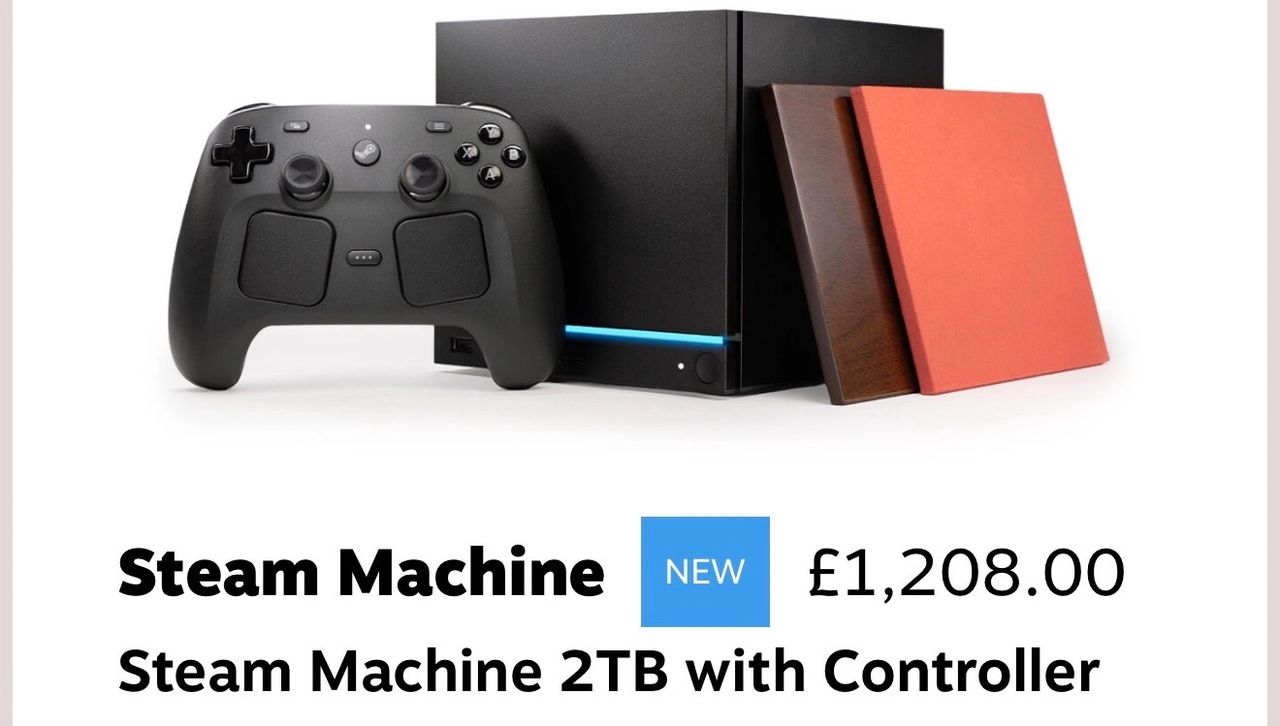
For a new buyer, the argument is harder. If someone just wants a box to play games on the sofa, PlayStation and Xbox are still easier to understand and cheaper to buy. The Steam Machine needs players to understand that they are not just buying a console. They are buying into the flexibility of PC gaming without building a PC themselves.
That makes the price both the biggest weakness and the most important part of the story.
Valve is effectively saying: this is what gaming hardware really costs when it is not heavily subsidised or locked into a closed console business model. Some players will respect that. Others will simply see the price and walk away.
The Steam Machine could still find an audience, especially among Steam Deck owners, PC players who want a living-room setup, and people who like Valve’s hardware approach. The Steam Deck proved Valve can make gaming hardware that feels focused, clever, and player-friendly.
But the Steam Machine has a tougher job. Handheld gaming had an obvious gap for Valve to fill. Living-room gaming already has strong competition from PlayStation, Xbox, Nintendo, and traditional PCs.
So the question is not whether the Steam Machine is interesting. It absolutely is.
The question is whether enough players will pay premium PC-style money for a device that looks like a console but refuses to play by normal console pricing rules.
If Valve can convince players that the Steam Machine is a flexible living-room PC rather than an expensive console, it could become one of the most important gaming hardware launches of the year. If not, the price may be the thing that stops it breaking beyond the hardcore Steam audience.